
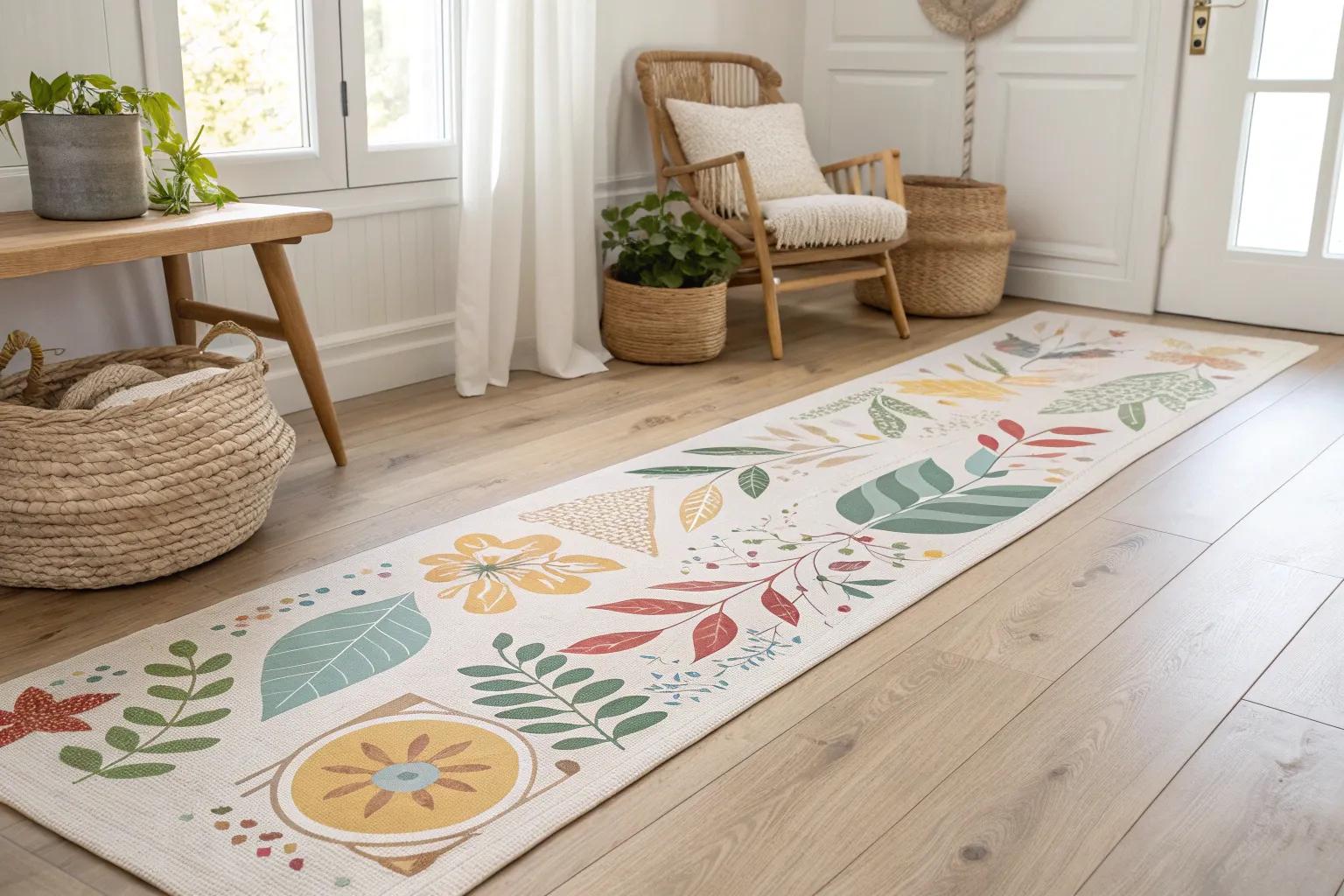
Creating a sensory path with decals is a delightful way to transform ordinary spaces into engaging, interactive experiences. Whether it’s for a classroom, a playroom, or even your living room, sensory paths invite children to move, learn, and explore in a fun and dynamic way.
1. Letter Learning Path

Add letters to help kids practice the alphabet while they move. Watching them shout out letters with excitement as they jump from one to another is truly rewarding.
2. Footprint and Handprint Trail

Incorporate footprints and handprints to create an interactive trail that kids can follow. It’s such a joy to watch them match their hands and feet to the decals, giggling all the way.
3. Educational Number Path

Add numbers to your path to integrate learning with play. I’ve found that this is a clever way to sneak in some math practice while keeping it fun and engaging.
4. Glow-in-the-Dark Decals

Incorporate glow-in-the-dark decals for a magical path that lights up at night. When I first tried this, the look of wonder on the kids’ faces was absolutely priceless.
5. Animal Adventure Path

Use animal footprints to guide children through the path, stimulating their imagination. It’s adorable to hear them roar like lions or hop like frogs as they go.
6. Spiral Sensory Challenge

Create a spiral path that encourages kids to balance and focus as they navigate the curves. This kind of design not only looks stunning but also helps improve coordination skills.
7. Bright and Bold Colors

Use bright colors to make the path visually stimulating and attractive. The first time I tried this, the vibrant hues instantly drew the children in, turning the path into a favorite play spot.
8. Thematic Garden Path

Design a garden-themed path with flowers and insects for a touch of nature indoors. I once added little ladybug decals, and the kids loved pretending to tiptoe through a magical garden.
9. Painter’s Tape Path

Create a path indoors using painter’s tape—a simple and effective way to craft a path that can be changed easily. This was a lifesaver during a workshop when we needed a quick setup.
10. Space-Themed Path

Create a space journey with stars and planets for an out-of-this-world adventure. This theme is always a hit, especially with aspiring young astronauts.
11. Musical Pathway

Incorporate musical notes and instruments for a path that inspires rhythm and movement. I love how this path gets kids humming tunes as they hop along.
12. DIY Chalk Path

For a temporary option, use chalk to draw a sensory path outdoors or on a chalkboard wall. It’s a quick, affordable way to test out new designs without commitment.
13. Movement-Inspired Instructions

Add decals with movement instructions like ‘Tiptoe’ or ‘March’ to guide kids through their sensory journey. It’s amazing to see little ones follow these prompts, turning simple directions into an exciting game.
14. Puzzle Piece Path

Design a path that mimics puzzle pieces for kids to piece together as they travel. It’s a fantastic way to combine problem-solving with physical activity.
15. Seasonal Sensory Themes

Switch up the path with elements that reflect the seasons, like leaves for fall. This keeps the space fresh and exciting, and the kids love the change in scenery.