
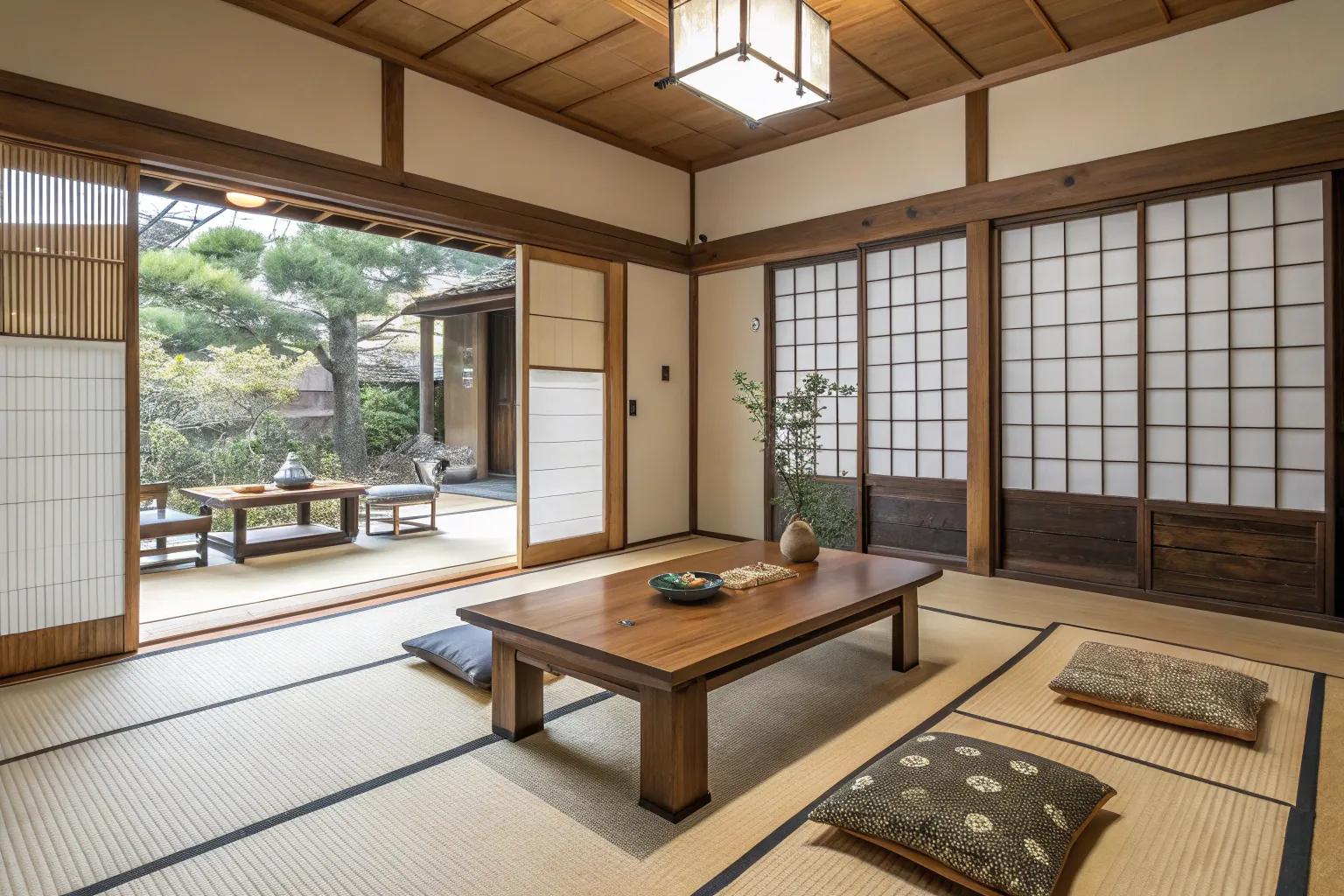
Imagine stepping into a living room that feels like a gentle embrace, where every element whispers tranquility and balance. Welcome to the world of Japanese living room design, where minimalism meets nature in perfect harmony.
1. Utilize Sliding Panels

Sliding panels offer flexibility and can divide spaces without feeling closed off. In my designs, they serve as functional and beautiful room dividers.
2. Create a Zen Aesthetic

Incorporating elements like small indoor gardens or bonsai trees can enhance tranquility. I often integrate these features to foster a sense of peace and mindfulness.
3. Add Bamboo Elements

Bamboo can be used in furniture or decor for an organic touch. Clients appreciate how it effortlessly brings nature into their homes.
4. Incorporate Textured Walls

Textured walls, like those with washi paper, add depth and interest. They provide an understated elegance that clients often fall in love with.
5. Maximize Natural Light

Large windows and open layouts can flood your living space with natural light. In my designs, I strive to enhance openness and connect with the outdoors.
6. Choose Eco-Friendly Materials

Opting for sustainable materials can create an environmentally conscious space. I love using materials that are both beautiful and kind to our planet.
7. Infuse Cultural Details

Incorporating Japanese cultural elements, like a tea set, can personalize your space. I love how these details tell a story and invite conversation.
8. Use Natural Fiber Rugs

Rugs made from natural fibers like jute or sisal add texture underfoot. I often recommend them for their durability and natural appeal.
9. Embrace Minimalism

Japanese living rooms thrive on simplicity and uncluttered spaces. In my projects, I’ve found that removing excess decor allows the room’s natural beauty to shine.
10. Incorporate Natural Elements

Bringing nature indoors with elements like wood and bamboo creates a calming atmosphere. I often use these materials to add warmth and texture to my designs.
11. Opt for Low Furniture

Low seating like futons or tatami mats can transform your living space into a cozy retreat. Clients love how this setup encourages relaxation and conversation.
12. Choose Neutral and Earthy Tones

Neutral palettes with whites, beiges, and earth tones create a peaceful environment. These colors are staples in Japanese design and always delight my clients.
13. Display Traditional Japanese Art

Art such as calligraphy or ukiyo-e prints can add cultural depth to your living room. Clients often find that these pieces become conversation starters.
14. Add Paper Lanterns

Paper lanterns provide soft, diffused lighting that’s perfect for a cozy evening. They’re a staple in many of my designs, offering both beauty and function.
15. Explore Layered Lighting

Layering different light sources can create a dynamic and inviting space. I use this technique to add depth and warmth to my designs.
16. Utilize Shoji Screens

Shoji screens are perfect for creating flexible spaces in a Japanese living room. I’ve seen them beautifully diffuse light, adding a soft touch to any room.
17. Feature Ceramic Decor

Ceramic pieces, whether vases or bowls, add an artisanal touch. They bring a tactile quality that clients often find appealing.
18. Incorporate Traditional Storage Solutions

Tansu chests offer functional storage with a traditional flair. Clients appreciate their ability to keep clutter at bay while adding character.