
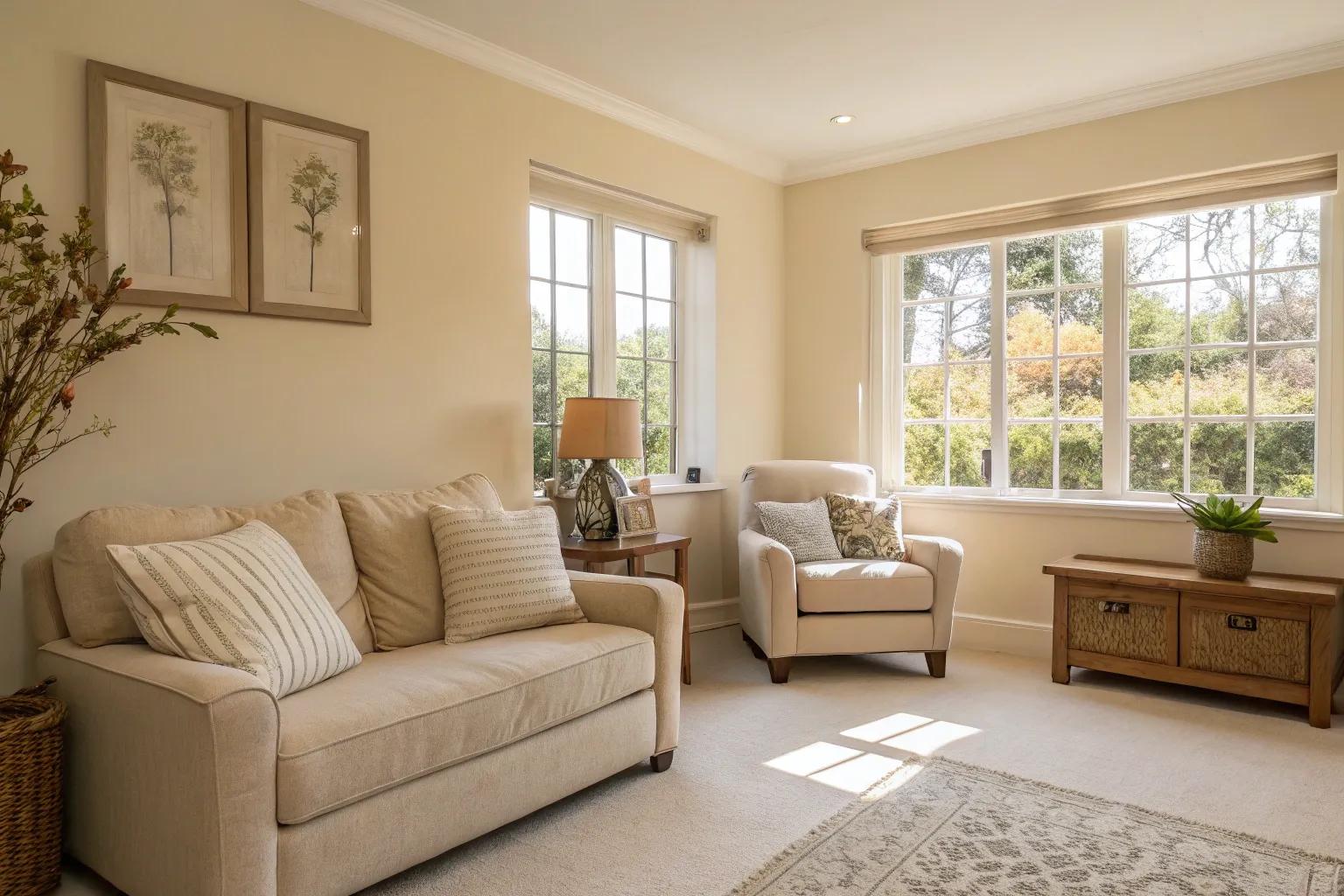
Creating a calming room at home is like crafting a personal sanctuary where stress takes a back seat. Let’s explore some ideas to transform any space into a tranquil haven.
1. Embrace Neutral and Soft Color Palettes

To set a soothing stage, consider neutral and soft color palettes like whites, beiges, and muted tones. I’ve found these shades create a peaceful backdrop that lets your mind unwind.
2. Select Textiles with Care

Choose textiles that are soft to the touch, like knitted or furry items. I always prioritize comfort over aesthetics when selecting materials.
3. Incorporate Nature Sounds

Enhance the calming effect with nature sounds. I often suggest ambient nature tracks to clients to deepen the relaxation experience.
4. Use Color Psychology

Apply color psychology by choosing hues that evoke calmness and positivity. Colors like light blues and greens are known to have a soothing effect.
5. Use Subtle Decorative Accents

Add subtle decorative accents like wall art or rugs that don’t overwhelm the senses. I often advise clients to choose pieces that complement rather than dominate the space.
6. Incorporate Feng Shui Principles

Arrange furniture according to Feng Shui principles to improve energy flow. I’ve seen how strategic placement can enhance harmony and balance in a room.
7. Create a Reading Nook

Designate a cozy reading nook with a comfortable chair and good lighting. Clients love having a dedicated spot to unwind with a book.
8. Select Cozy Furniture

Invest in cozy furniture that invites you to sink in and relax. From my projects, I’ve learned that a comfortable chair or sofa can be the cornerstone of a calming space.
9. Add a Music Corner

Consider setting up a music corner with your favorite instruments or a speaker. Music has a profound ability to calm the mind and soothe the soul.
10. Opt for Minimalist Design

A minimalist design helps keep the mind clear and focused. In my own projects, I often use simple, clean lines and minimal decor to craft spaces that breathe.
11. Integrate Water Features

Add a small water feature like a tabletop fountain to introduce soothing sounds and movement. Water elements can transform a room into a peaceful retreat.
12. Soft, Ambient Lighting

Choose soft, ambient lighting to create a peaceful ambiance. I suggest using lamps with warm tones to mimic a gentle sunset.
13. Use Reflective Surfaces

Incorporate reflective surfaces like mirrors to amplify natural light and create a sense of openness. Mirrors can make any room feel larger and more serene.
14. Incorporate Natural Elements

Integrating natural elements like plants and wood can enhance tranquility. I always recommend adding a few indoor plants to bring life and calm into a room.
15. Create a Zen Garden

Design a small Zen garden indoors to cultivate a sense of peace and mindfulness. These gardens are a tactile way to engage with tranquility.
16. Personalize with Meaningful Items

Include personal items that bring joy and calm, such as family photos or souvenirs. Personal touches make a space uniquely yours.
17. Layer with Comfortable Textures

Layering with comfortable textures such as soft blankets and plush pillows invites relaxation. In my experience, these tactile elements can transform a room into a cozy retreat.
18. Organize for Functional Space

Create a functional space by staying organized to avoid clutter. A well-organized room is like a clear mind; it’s essential for maintaining calm.
19. Calm with Scent

Utilize aromatherapy to infuse the air with calming scents. Essential oils like lavender and eucalyptus are my go-tos for creating a serene atmosphere.
20. Accessorize with Stones

Consider accessorizing with stones for their calming properties. I often use small stone arrangements to add a natural touch that doesn’t distract.
21. Introduce a Touch of Sand

A touch of sand can bring tranquility, whether in an hourglass or a mini sand garden. Watching sand flow is mesmerizing and can soothe the mind.