
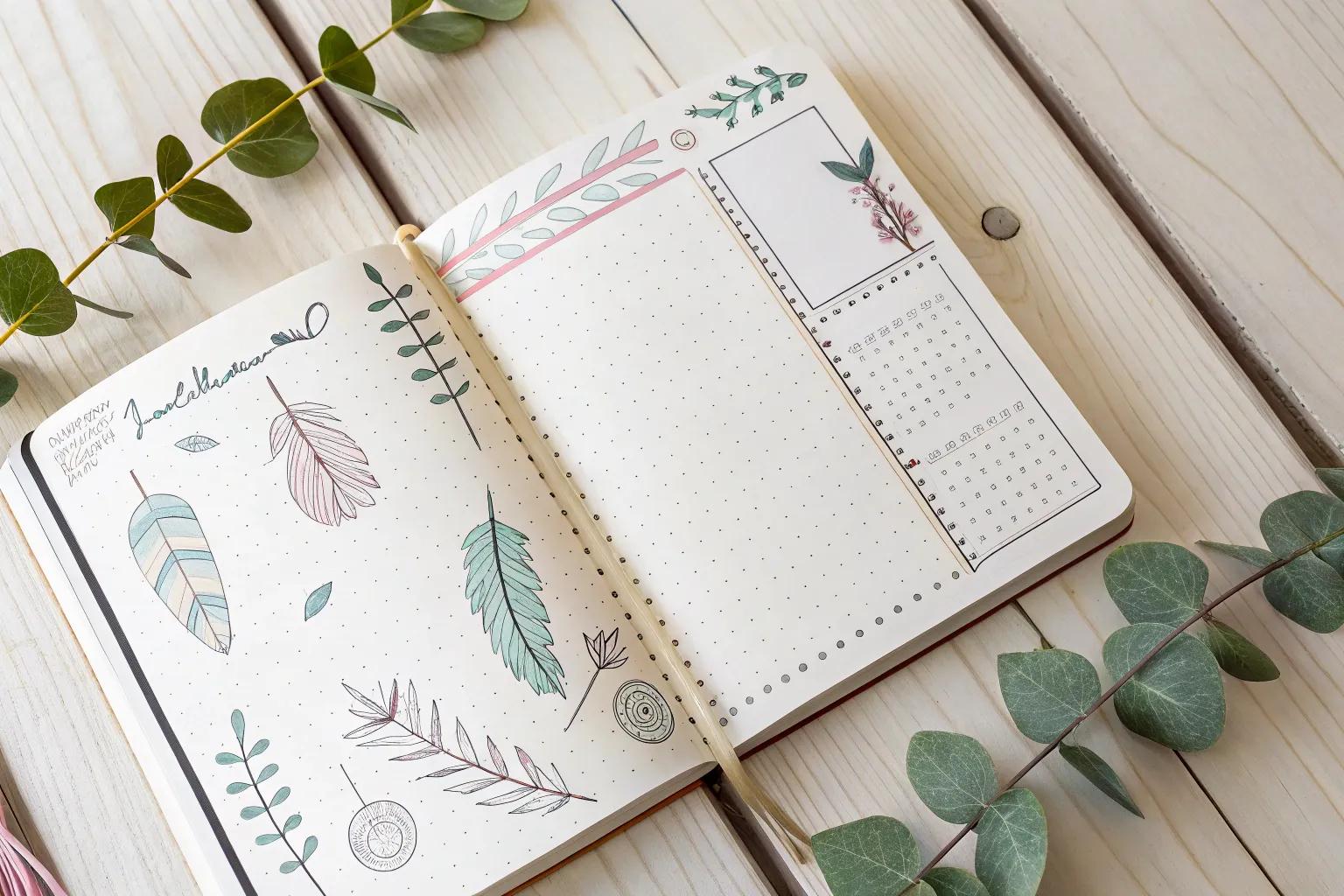
Creating a mood tracker in your bullet journal is a beautiful way to visualize your emotions and gain insights into your daily life. Let’s dive into some creative ideas that will turn your journal into a personal masterpiece.
1. Habitual Mood Tracker

Combine habit tracking with mood tracking to see correlations. It’s intriguing to notice how my habits, like exercise, influence my mood throughout the week.
2. Mood Mosaic

Create a mosaic of small tiles, each colored based on your mood. This intricate design transforms my mood tracking into a stunning piece of art over the month.
3. Colorful Circles of Emotion

Draw circles and fill them with colors representing your moods. This vibrant method brightens up my journal and makes mood tracking feel like a color therapy session.
4. Personal Mood Storyboard

Craft a storyboard where each panel illustrates the day’s mood. This cinematic approach turns my bullet journal into a storyboard of my life.
5. Shaping Emotions with Hearts

Use heart shapes to represent your feelings, coloring them according to your mood. This is such a sweet way to keep track of emotions and adds a touch of warmth to your pages.
6. Weather Your Moods

Use weather symbols like suns, clouds, and rain to reflect your mood changes. This method is whimsical and makes mood tracking feel like a little forecast in my journal.
7. Emotion Landscape

Draw a landscape where each element represents a mood. Imagine a tree with branches for happy days and clouds for gloomy ones—it’s like painting my emotional world.
8. Nature-Inspired Growth

Use flowers or leaves to track your emotions, drawing a new petal or leaf for each day. This has been my go-to for a serene and organic look in my journal.
9. Calendar Creativity

Turn a traditional calendar layout into a mood tracker by color-coding each day. It’s a classic approach that offers a clear monthly overview at a glance.
10. Graph Your Emotions

Create a line chart to track the highs and lows of your mood analytically. I appreciate how this approach provides a clear visual of emotional patterns over time.
11. Abstract Emotion Art

Create abstract designs that symbolize your mood. This free-form approach allows me to express emotions without constraints, leading to surprising insights.
12. Daily Icons for Moods

Assign an icon like a mug or a camera to each mood, and fill them in daily. This method brings a playful element to mood tracking and feels like a mini-illustration challenge each day.
13. Celestial Mood Mapping

Incorporate zodiac symbols or celestial motifs to reflect your mood. I find this method adds a mystical element to my journal and keeps me connected to the universe.
14. Banners of Emotion

Try using banners and flags to represent different moods. I love how this design adds a festive touch to my journal, making it feel like a celebration of my emotional journey.
15. Themed Illustrations

Pick a theme you love—like vintage cameras or cozy teacups—and draw an item for each day. This makes mood tracking feel like a delightful storytelling exercise.