
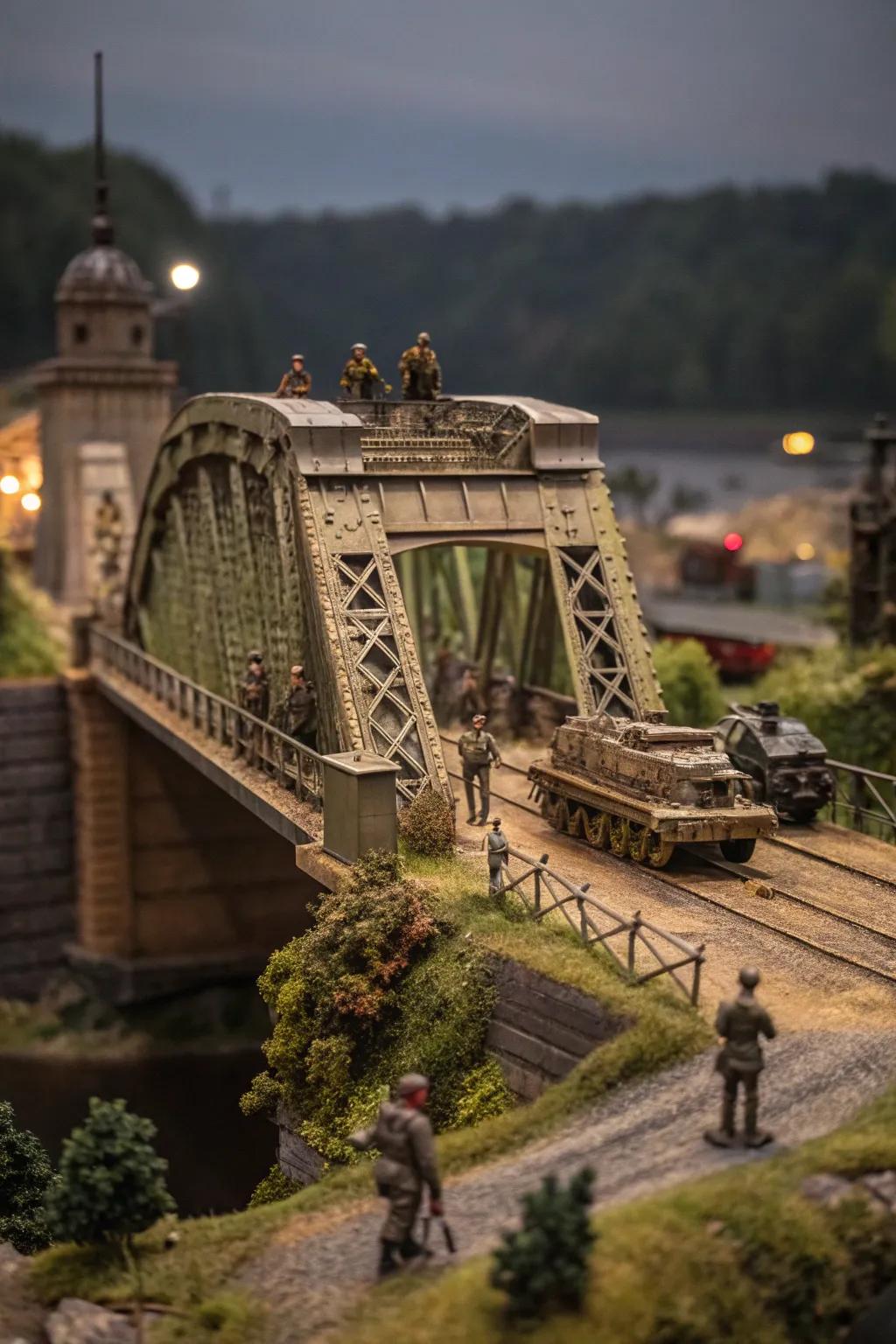
Hey there, fellow DIY enthusiasts! If you’ve ever wanted to capture a piece of history in your home decor, creating a WW2 diorama is a fantastic way to do it.
1. Historical Highlights

Base your diorama on a specific historical event, like Omaha Beach. This not only makes it educational but also a conversation starter!
2. Nature’s Battlefield

Incorporate elements like trees and grass to create a natural setting. Forest or rural battlefields bring a touch of tranquility amidst the chaos.
3. Historic Landmarks

Incorporate historic landmarks like bridges or monuments. It ties your diorama to real-world locations and events.
4. Battlefield in a Box

I love the idea of using a small wooden box as your base to create a battlefield scene. This makes it easy to move around and perfect for displaying on a shelf.
5. Waterfront Warfare

Add a river or beach element to your diorama. A bit of resin can mimic water perfectly, capturing those crucial amphibious landings.
6. Camp Life

Depict the quieter moments of war with a camping scene. Use small tents, campfires, and supply crates to show soldiers’ daily life outside of battle.
7. Urban Warfare Wonders

Create a dramatic urban warfare scene with ruined buildings and debris. I find that using broken bricks or plaster really captures the chaos of city battles.
8. Field Hospital

Show the crucial role of medics with a field hospital scene. Tiny stretchers and medical tents make it feel lifelike.
9. Miniature Trenches

Dig into the details with miniature trenches. They add depth and realism, and I love using papier-mâché for texture.
10. Aerial Assault

Create the illusion of a crashed plane with cotton and paint for smoke effects. It’s a showstopper in any diorama!
11. Sculpted Sandbags

Add sandbag fortifications for a defensive touch. I find that using clay or foam gives them a realistic look.
12. Hidden Bunkers

Incorporate hidden bunkers or underground shelters. It’s a surprising element that invites viewers to take a closer look.
13. Ruins of War

Craft a scene with destroyed structures to show the aftermath of battles. The use of foam or plaster for rubble gives it an authentic look.
14. Under the Night Sky

Create a night-time ambush scene with dark paints and subtle lighting. It’s dramatic and adds a mysterious vibe.
15. The Great Escape

Create an escape scene with tunnels or crossing points. This adds a narrative element that’s sure to captivate.