
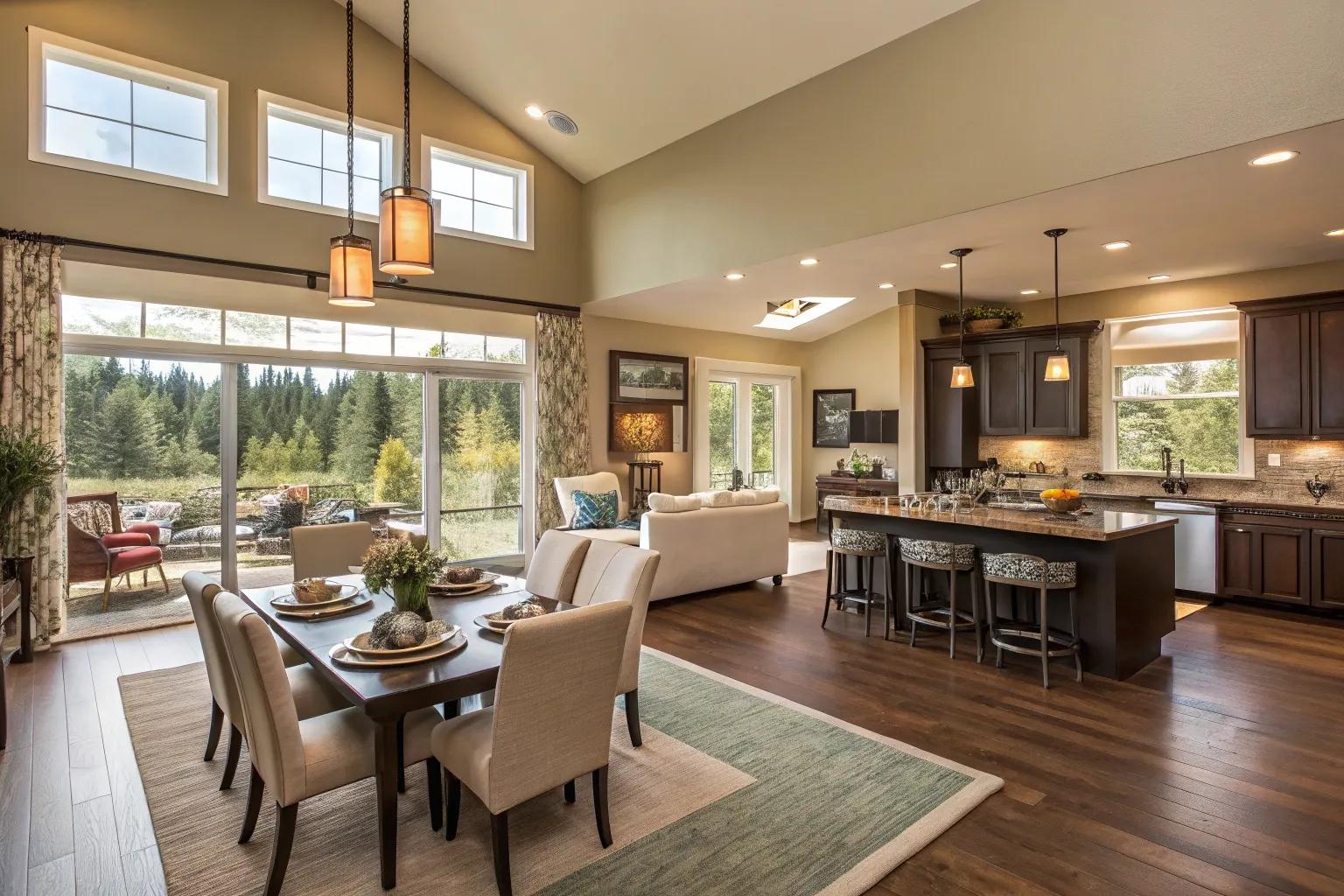
Open floor plans offer a sense of freedom and spaciousness that many of us cherish. Yet, choosing the right paint scheme can be a puzzle—let me share some creative strategies from my years of design experience.
1. Defining Functional Spaces

Use paint to subtly define functional areas within open floor plans. I frequently utilize color to distinguish dining areas from living spaces, enhancing both function and aesthetics.
2. Embrace Modern Design

A contemporary design with clean lines and minimal decor suits open floor plans. I often steer clients towards a modern palette to achieve elegance and simplicity.
3. Cohesive Color Schemes

In open floor plans, cohesive color schemes create a seamless flow from one area to the next. I often suggest pairing complementary colors to unify spaces while adding subtle variety.
4. Pops of Color

Adding pops of color through decor can make a neutral space lively. I love using colorful pillows or artwork to inject personality without overwhelming the eye.
5. Mixed Textures and Materials

Incorporating mixed textures and materials can add dimension. I often mix wood, metal, and fabric to create interest and balance in open spaces.
6. Harness Natural Light

Leveraging natural light can enhance your color choices. I always aim to maximize light entry points to highlight the beauty of the paint.
7. Neutral and Earth Tones

Neutral and earth tones provide a versatile and calming backdrop. I often recommend these shades for clients looking to create a serene and adaptable environment.
8. Create Focal Points

Establishing a focal point such as a fireplace or a stunning view can guide the eye. I often use color to accentuate these features, anchoring the room.
9. Strategic Use of Dark Shades

Apply dark shades strategically to create depth and interest. I often recommend using darker tones on far walls to draw the eye across the space.
10. Personal Touch with Art and Decor

Adding art and decor personalizes your space, making it uniquely yours. I encourage clients to display pieces that resonate with them, adding character and warmth.
11. Play with Patterns

Incorporate patterns to visually divide spaces without walls. I’ve used stripes or geometric designs to subtly delineate areas while maintaining openness.
12. Use of Spicy Colors

Incorporate spicy colors in unexpected places like a kitchen island or breakfast bar. I’ve seen how this adds a delightful surprise that enlivens the space.
13. Incorporate Biophilic Design

Biophilic design, integrating natural elements like plants, can enhance well-being. I find that greenery complements any color scheme and breathes life into open spaces.
14. Ceiling Accents

Don’t forget the ceiling! Painting ceiling accents can define areas like the dining room, adding a layer of sophistication. I find this technique especially effective in open spaces.
15. Reflective Surfaces and Light

Utilize reflective surfaces to amplify light and color. Mirrors and glossy finishes can make spaces feel larger and more vibrant, a trick I use often in design.