
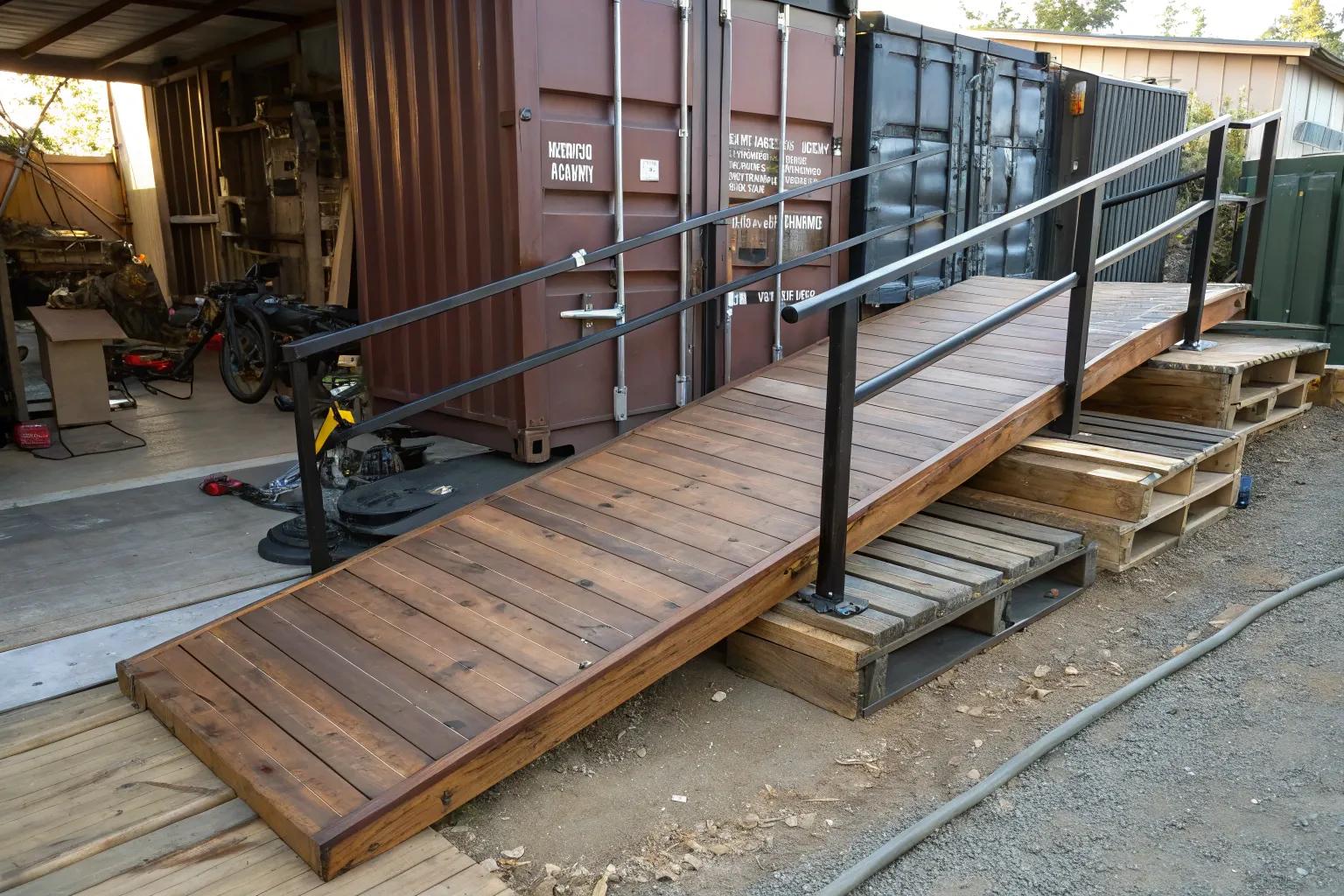
Turning a shipping container into a versatile storage or workspace solution is all the rage, but accessing these containers can be a bit of a challenge. That’s where a handy DIY ramp comes in, making it a breeze to roll in and out anything you need.
1. Interconnected Panel Ramp

Create a modular ramp with interconnected panels that you can easily assemble and disassemble. I love this design for its flexibility, especially when we need to relocate containers.
2. Decking Board Ramp

Decking boards are another alternative for a ramp surface, offering a blend of durability and aesthetics. My friend swears by it for his outdoor container office.
3. Turf-Covered Ramp

Covering a ramp with turf can blend it into your garden setting seamlessly. I helped a client create one for their container greenhouse, and it’s like a green carpet leading in.
4. Adjustable Ramp with Hinges

Adding hinges to your ramp allows you to adjust its angle or even fold it away. My adjustable ramp is perfect for varying terrains—trust me, your back will thank you!
5. Reclaimed Pallet Ramp

Repurpose old pallets by attaching them together to form a robust ramp. Not only does this save money, but it also gives your project a rustic touch—I did this for a friend’s container, and it was a hit!
6. Portable Aluminum Ramp

A portable aluminum ramp is lightweight and easy to move. I love borrowing my friend’s for a quick setup whenever I’m hosting a pop-up market.
7. Plywood Ramp

Using plywood is a cost-effective way to build a smooth and sturdy ramp. Sealing it with a weatherproof coating is key—my plywood ramp has withstood many Texas rains.
8. Expandable Accordion Ramp

An expandable accordion ramp adjusts to the length you need. It’s a bit of a DIY marvel that’s perfect for those who love a bit of flair with their function.
9. Brick and Mortar Ramp

Building a ramp with bricks and mortar offers a robust and long-lasting solution. I recall assisting with one of these, and it added a charming rustic touch.
10. Recycled Tire Ramp

Using recycled tires can provide a cushioned and grippy surface. I experimented with this on a whim, and it’s been surprisingly effective for moving heavy items.
11. Steel Mesh Ramp

A steel mesh ramp is an excellent choice for strength and grip. It’s worked like a charm for a friend’s auto workshop container.
12. Metal Sheet Ramp

For a more durable option, consider using metal sheets. I used a piece of corrugated metal from a local salvage yard, and it’s held up beautifully against the elements.
13. Simple Wooden Plank Ramp

A straightforward solution is using wooden planks to create a sturdy and functional ramp. I once crafted one with leftover lumber, and it did wonders for rolling in my garden tools effortlessly.
14. Rubber Tread Ramp

Adding rubber treads to your ramp can prevent slips and is especially useful in wet conditions. After a few close calls, I added them, and it’s been a total lifesaver.
15. Bamboo Ramp

For an eco-friendly twist, why not try a bamboo ramp? It’s surprisingly strong and gives a lovely natural look—I crafted one for a container art studio, and it’s stunning.
16. Concrete Ramp

For a permanent solution, pouring a concrete ramp could be ideal. It’s a bit more labor-intensive, but the result is a sleek, seamless entryway—I helped a neighbor with one, and it’s been a game-changer.
17. Foldable Ramp

A foldable ramp can be tucked away when not in use, perfect for saving space. It’s been my go-to for events where space is a premium.
18. Woven Rope Ramp

For a nautical vibe, a woven rope ramp adds both character and function. Tried this for a coastal retreat, and it complements the seaside perfectly.