
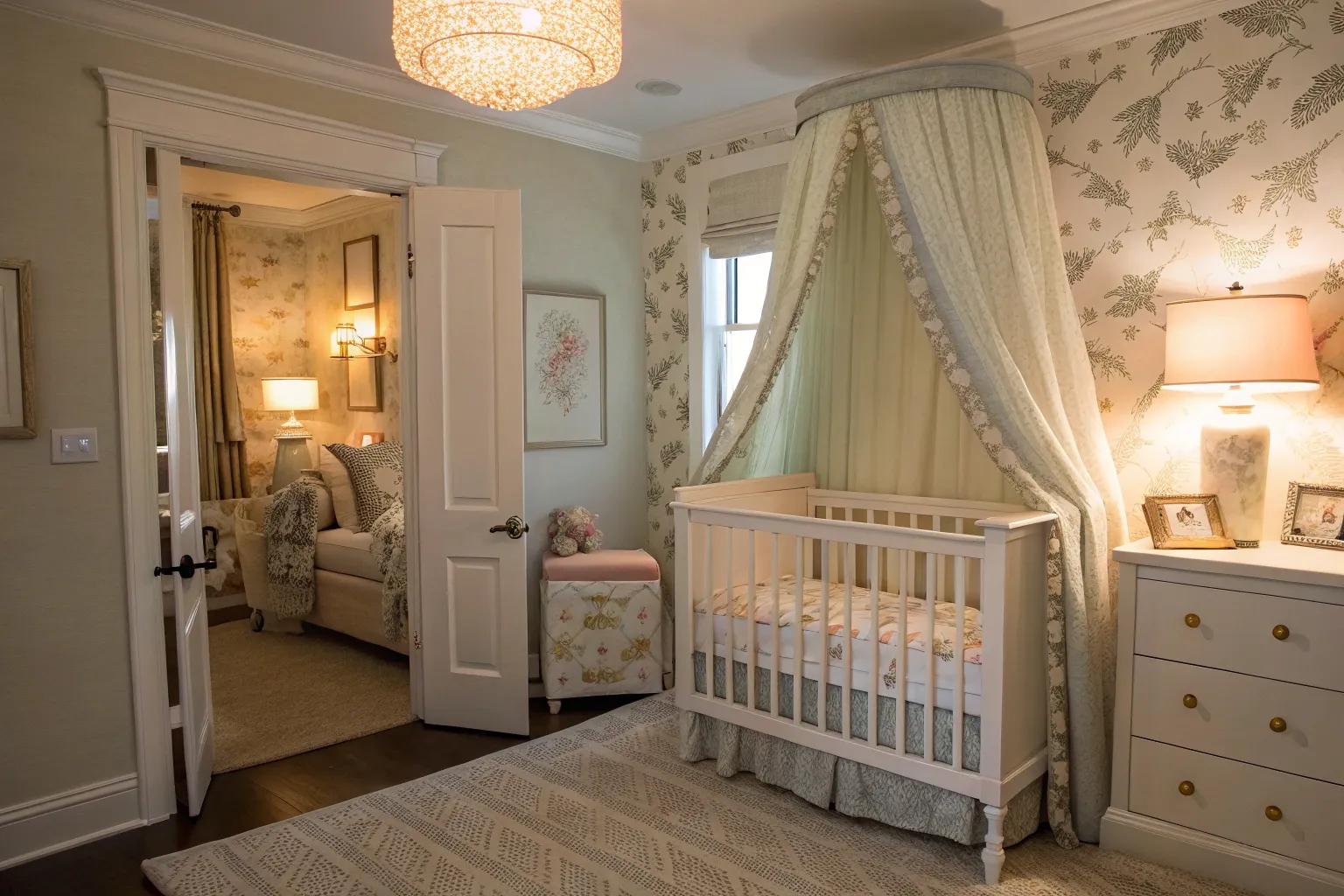
Creating a nursery nook is like crafting a cozy little world for your baby within the existing space of your home. As a designer, I’ve helped many parents carve out these special corners, blending practicality with aesthetic elegance.
1. Choose a Neutral Color Palette

A neutral color palette can create a soothing and timeless setting. It’s versatile and can easily be adjusted with accessories as your child grows.
2. Add a Cozy Rug

A soft rug not only defines the space but also cushions footsteps and provides a comfortable area for playtime. Choose one that’s easy to clean for practicality.
3. Include a Mirror for Visual Expansion

A well-placed mirror can make a small space feel larger and brighter. It’s a simple trick that adds depth and dimension to your nursery nook.
4. Use Curtains for Separation

Curtains can serve as a temporary wall, offering privacy and a sense of enclosure without the need for construction. It’s an easy way to create a distinct area for your nursery.
5. Use a Hanging Organizer

A hanging organizer on the wall or the back of a door can provide additional storage for diapers, wipes, and other essentials, keeping them within easy reach.
6. Install Wall Decals

Wall decals are a great way to add personality without permanent commitment. They come in various designs and can be easily changed as your child grows.
7. Incorporate Soft Textures

Introduce soft textures like plush toys and blankets to make the nook feel cozy and inviting. These elements add warmth and comfort to the space.
8. Incorporate Personal Touches

Add personalized decor like framed family photos or custom name signs. These elements make the space feel uniquely yours and can evoke warmth and nostalgia.
9. Create a Soft Lighting Ambiance

Incorporate ambient lighting like wall-mounted lamps or dimmable floor lamps to make night-time feeds soothing and gentle. I often recommend lighting that can be adjusted to suit different times of the day.
10. Incorporate Multi-Functional Furniture

Opt for a dresser that doubles as a changing table. This dual-functionality is a game-changer in small spaces, providing storage and a practical surface for diaper changes.
11. Maximize Your Vertical Space

When floor space is limited, think vertical. I love incorporating wall shelving above the crib for books, decor, and baby essentials, which keeps everything accessible yet out of the way.
12. Embrace a Minimalist Theme

A minimalist approach can make even the smallest space feel open and airy. Stick to a neutral palette and simple decor to create a calming environment.
13. Create a Reading Corner

If space allows, add a small reading corner with a comfy chair and a basket of books. This can be a delightful spot for bedtime stories and bonding.
14. Incorporate Personalized Art

Hang personalized art pieces, such as your child’s initials or a custom illustration, to give the nook a special and unique touch.
15. Opt for a Mobile

A whimsical mobile above the crib can captivate your baby’s attention while adding a decorative element. I often craft these myself for clients, bringing a bit of artful playfulness into the design.
16. Choose a Compact Crib

A mini crib or bassinet can fit snugly into a small space without sacrificing safety or style. In my experience, these are perfect for the first few months and can easily be transitioned out as your baby grows.
17. Utilize Under-Crib Storage

Don’t overlook the space beneath the crib for storage. Baskets or bins can be ideal for stashing extra blankets, diapers, or toys, keeping essentials close yet tidy.
18. Install a Pegboard for Versatile Storage

A pegboard can be customized with shelves, hooks, and baskets for flexible storage solutions. It’s a creative way to keep the nursery organized and adaptable.
19. Add a Custom Closet

If your nook is in a closet, consider installing a custom closet system to maximize storage and organization. It can make a small space incredibly functional.
20. Use a Folding Screen for Privacy

A folding screen can create a sense of privacy and enclosure in an open-plan room. It’s a quick way to define the baby’s space without permanent modifications.